What Constitutes an SEO Fix and When Do You Need One?
Posted by
How to Implement an Effective SEO Fix: A Complete Guide for Website Optimization
When your website's organic traffic suddenly drops or your rankings disappear from search results, you need more than generic advice. You need a systematic SEO fix strategy that addresses root causes and delivers measurable results. Whether you're dealing with a Google penalty, technical issues, or declining performance, this comprehensive guide will walk you through the exact steps to diagnose problems and implement solutions that restore your search visibility.
What Constitutes an SEO Fix and When Do You Need One?
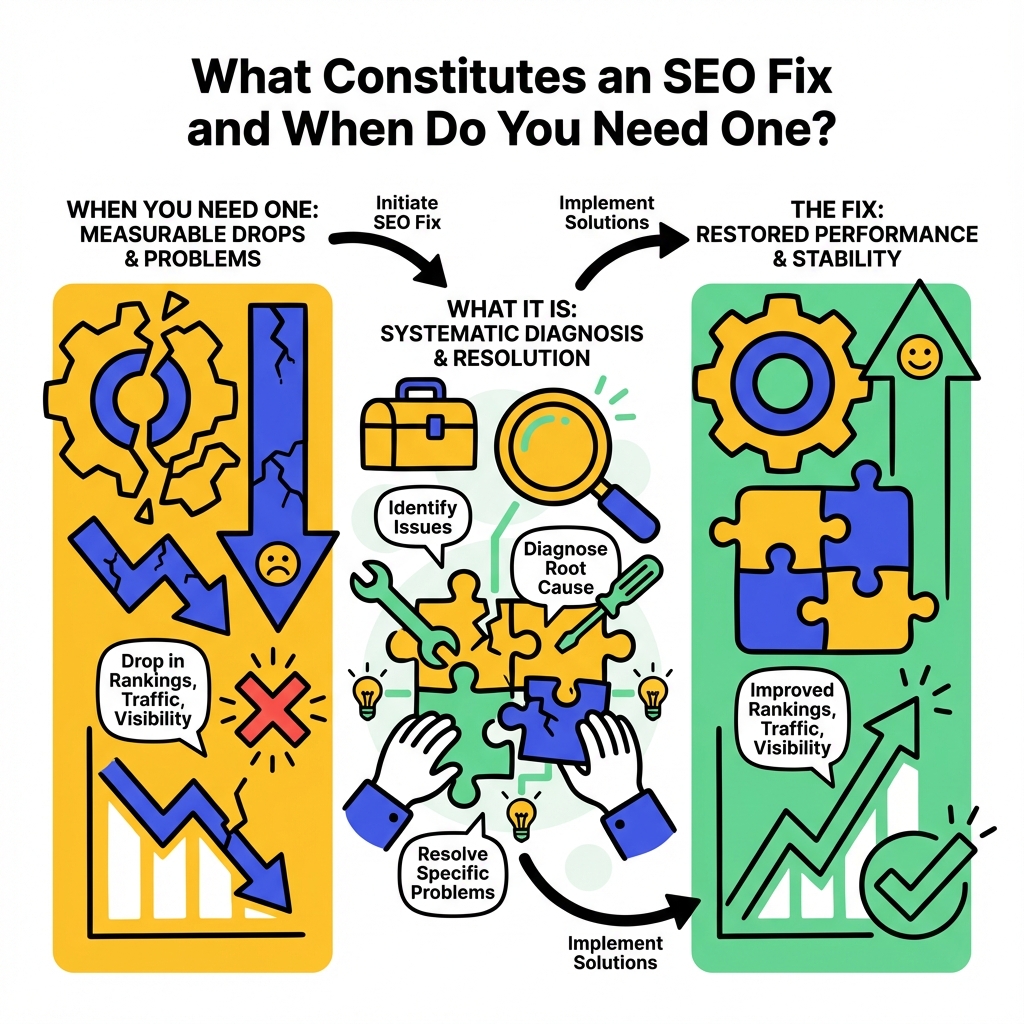
An SEO fix refers to the systematic process of identifying, diagnosing, and resolving issues that negatively impact your website's search engine performance. Unlike routine optimization, an SEO fix addresses specific problems that have caused measurable drops in rankings, traffic, or visibility.
Common scenarios requiring an SEO fix include sudden ranking drops after algorithm updates, technical errors causing crawling issues, penalty recoveries, or content problems that violate search engine guidelines. The key difference between regular SEO maintenance and an SEO fix lies in urgency and focus. While ongoing optimization gradually improves performance, an SEO fix targets immediate threats to your search presence.
Recognition is the first step toward resolution. If you've noticed significant traffic declines, ranking losses for important keywords, or warnings in Google Search Console, you likely need an SEO fix rather than standard optimization tactics.
How to Diagnose SEO Problems Before Implementing Fixes
Effective diagnosis forms the foundation of any successful SEO fix. Start by gathering comprehensive data from multiple sources to understand the scope and nature of your issues.
Begin with Google Search Console to identify crawling errors, indexing problems, and manual penalties. Check the Coverage report for blocked resources, server errors, and redirect chains. The Performance report reveals which queries and pages have lost visibility, providing crucial clues about affected content areas.
Analytics data offers additional insights into user behavior changes. Compare traffic patterns before and after the problem emerged, focusing on organic search metrics. Look for correlations between ranking drops and specific pages, keywords, or site sections. This analysis helps distinguish between algorithm impacts, technical issues, and content problems.
Technical Audit Checklist for SEO Fixes
Technical problems often require immediate attention during an SEO fix. Use this systematic checklist to identify critical issues:
- Site Speed and Core Web Vitals: Measure loading times, cumulative layout shift, and largest contentful paint using Google's PageSpeed Insights
- Mobile Responsiveness: Test all affected pages across different devices and screen sizes
- Crawlability: Verify robots.txt files, XML sitemaps, and internal linking structure
- Indexing Status: Check for noindex tags, canonical issues, and duplicate content problems
- HTTPS Implementation: Ensure proper SSL certificates and mixed content resolution
Step-by-Step SEO Fix Implementation Process
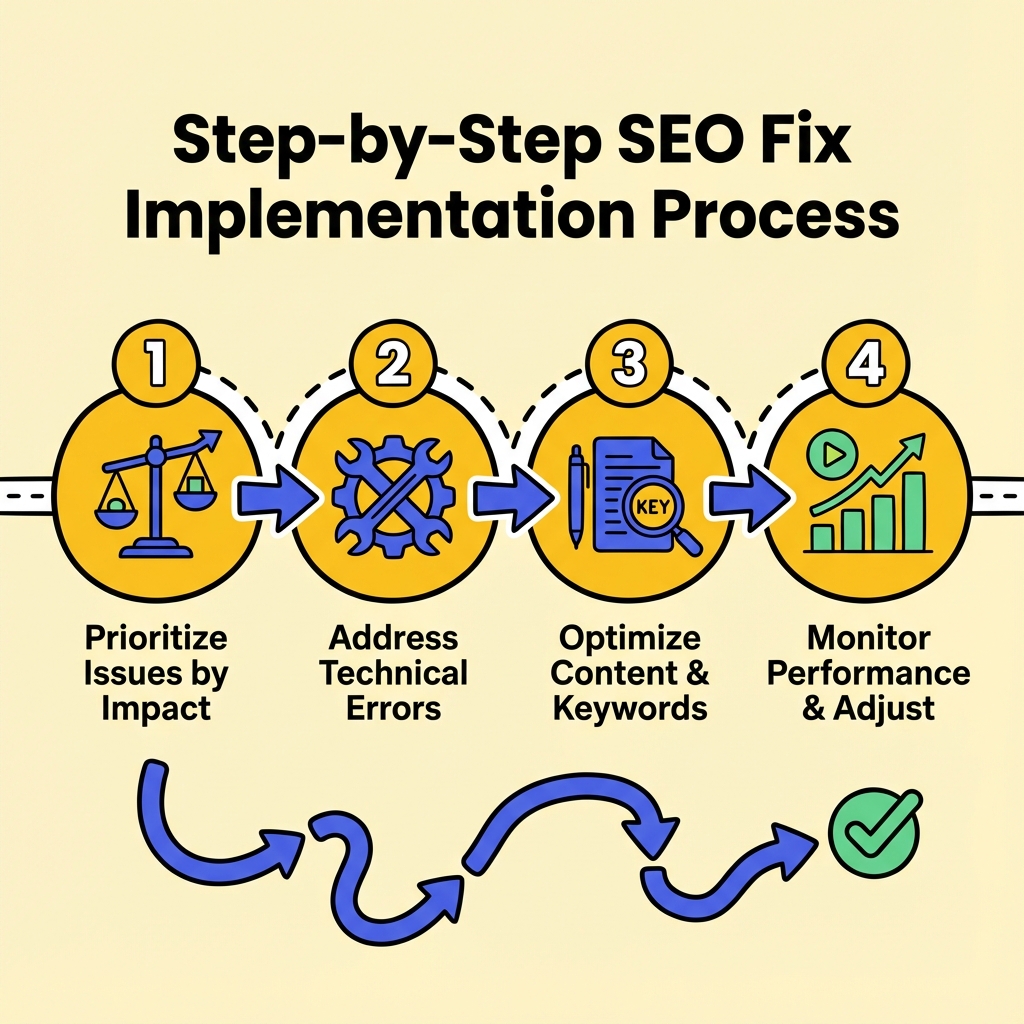
Once you've identified the problems, follow this structured approach to implement your SEO fix effectively.
Step 1: Prioritize Issues by Impact Rank identified problems based on their potential impact on search performance. Address critical technical errors first, followed by content issues, then optimization opportunities. Server errors and crawling blocks take precedence over minor on-page elements. Step 2: Create a Recovery Timeline Develop realistic timelines for each fix, considering implementation complexity and resource availability. Some technical fixes can be implemented immediately, while content improvements may require weeks of work. Set clear milestones to track progress and maintain momentum. Step 3: Implement Technical Fixes Start with server-level issues that prevent search engines from accessing your content. Fix broken redirects, resolve duplicate content through proper canonicalization, and eliminate crawling barriers. Test each change thoroughly before moving to the next issue.Content-Related SEO Fix Strategies
Content problems require different approaches than technical issues. Focus on these key areas when implementing content-focused SEO fixes:
Quality and relevance form the cornerstone of content recovery. Audit affected pages for thin content, keyword stuffing, or outdated information. Update content to match current search intent and user needs. According to Moz's comprehensive SEO guide, content quality directly correlates with ranking stability and recovery speed.
Remove or consolidate pages that provide minimal value to users. Merge similar content pieces to create comprehensive resources that better serve search intent. This consolidation often resolves duplicate content issues while improving overall site authority.
Advanced SEO Fix Techniques for Complex Problems
Some SEO problems require sophisticated solutions beyond basic fixes. These advanced techniques address complex issues that standard approaches cannot resolve.
Algorithm recovery presents unique challenges requiring specialized strategies. Research the specific algorithm update that affected your rankings, then align your SEO fix with the update's focus areas. For example, helpful content updates require different approaches than link spam updates.
Penalty recovery demands meticulous attention to Google's quality guidelines. Document all problematic elements, create detailed remediation plans, and submit reconsideration requests with comprehensive evidence of improvements. Track every change for future reference and proof of compliance efforts.
| SEO Fix Type | Timeline | Difficulty | Success Rate |
|---|---|---|---|
| Technical Errors | 1-2 weeks | Medium | 85-95% |
| Content Issues | 4-8 weeks | Medium | 70-85% |
| Penalty Recovery | 8-16 weeks | High | 60-75% |
| Algorithm Impact | 12-24 weeks | High | 50-70% |
How to Monitor and Measure SEO Fix Success
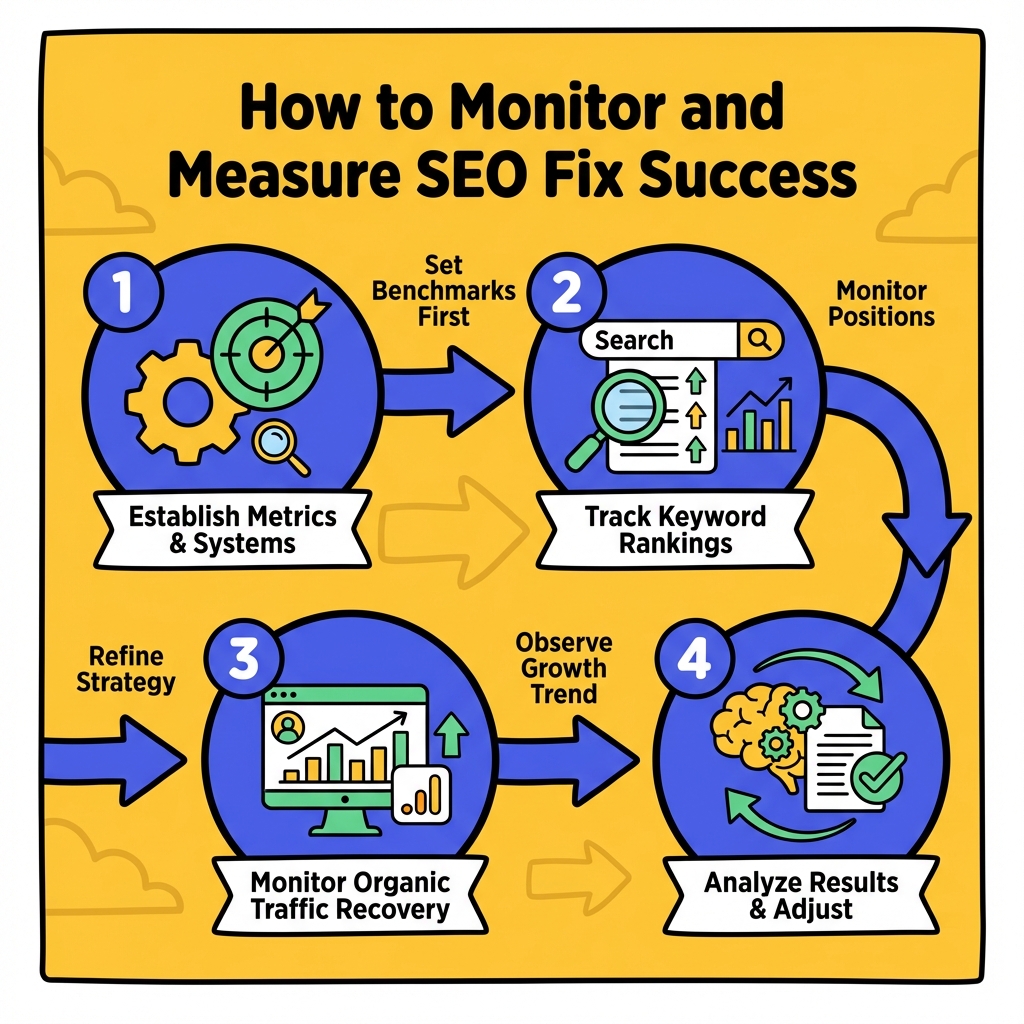
Measuring recovery progress ensures your SEO fix efforts produce desired results. Establish clear metrics and monitoring systems before implementing changes.
Track ranking improvements for affected keywords using reliable rank tracking tools. Monitor organic traffic recovery through Google Analytics, focusing on the pages and sections that experienced problems. Set up custom alerts for significant changes in key performance indicators.
Recovery timelines vary significantly based on problem severity and fix complexity. Technical issues often show improvement within days or weeks, while content and penalty recoveries may require months. According to Search Engine Land's recovery case studies, most successful SEO fixes show initial positive signals within 4-6 weeks of implementation.
Document all changes and their corresponding impact on search performance. This documentation helps refine future SEO fix strategies and provides valuable insights for ongoing optimization efforts.
Common SEO Fix Mistakes to Avoid
Even well-intentioned SEO fix attempts can backfire without proper execution. Avoid these common pitfalls that can worsen your search performance.
Rushing implementation without thorough testing often creates new problems while attempting to solve existing ones. Test all changes in staging environments when possible, and implement fixes gradually to isolate their individual impacts.
Over-optimization during recovery attempts frequently triggers additional algorithm flags. Focus on fixing identified problems rather than implementing aggressive optimization tactics. The goal is restoration, not aggressive improvement that might trigger new issues.
Neglecting user experience while focusing solely on technical metrics undermines long-term recovery success. Balance technical fixes with improvements that genuinely enhance user satisfaction and engagement.
Conclusion
Implementing an effective SEO fix requires systematic diagnosis, strategic planning, and careful execution. By following this step-by-step approach, you can identify the root causes of your search performance problems and implement targeted solutions that restore your website's visibility and traffic.
Remember that SEO fix success depends on patience, persistence, and continuous monitoring. Most recovery efforts show gradual improvement over weeks or months rather than immediate results. Stay focused on addressing the underlying issues rather than seeking quick fixes that might create additional problems.
Ready to implement your SEO fix strategy? Start with a comprehensive audit of your website's technical foundation, then systematically address each identified issue using the techniques outlined in this guide. Your search performance recovery begins with taking that first diagnostic step today.
